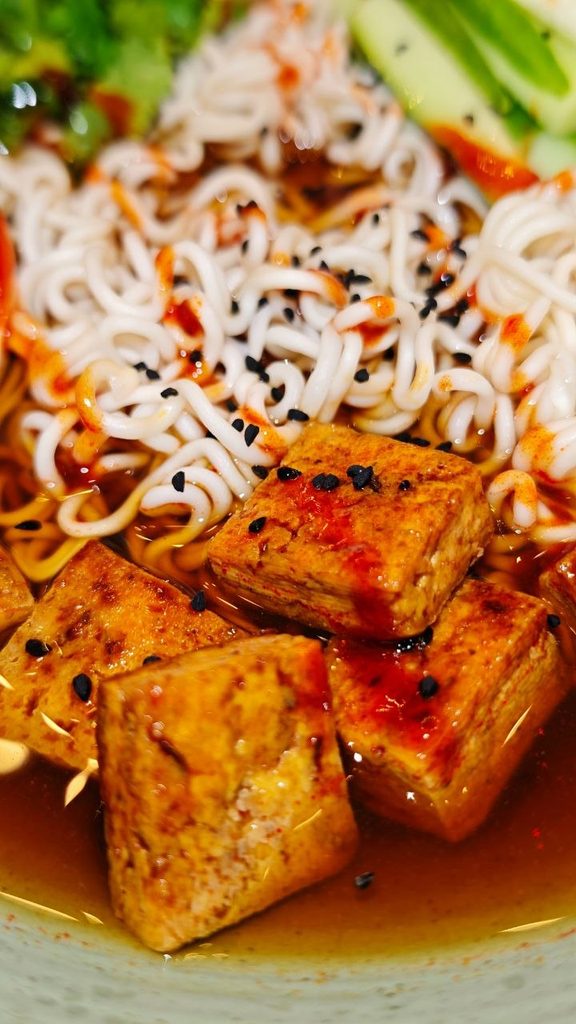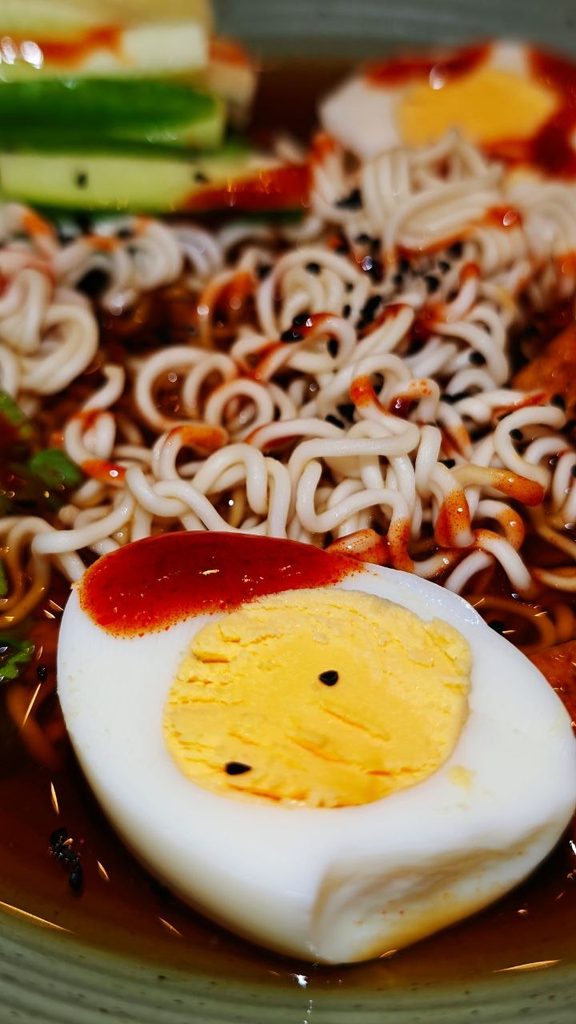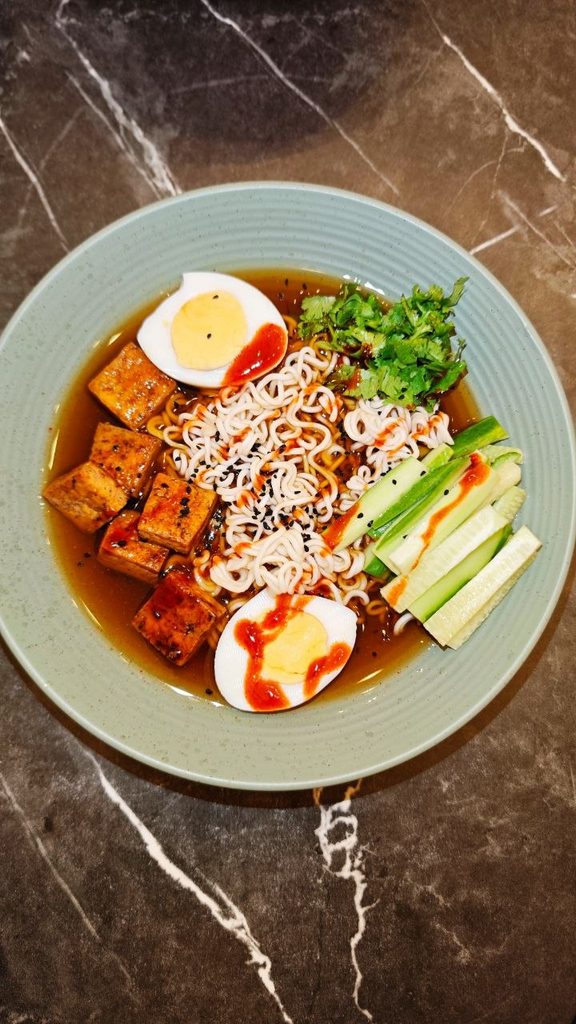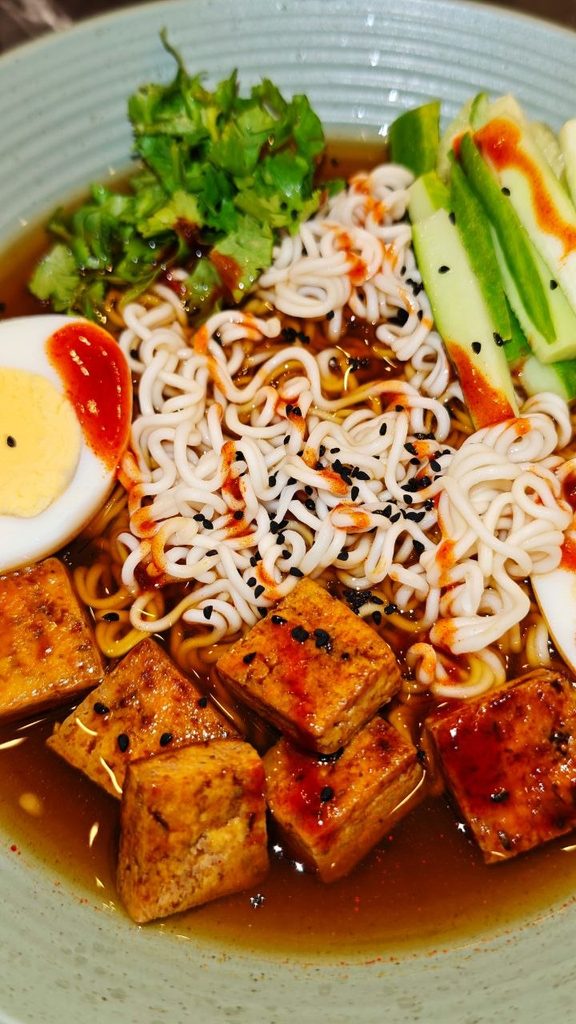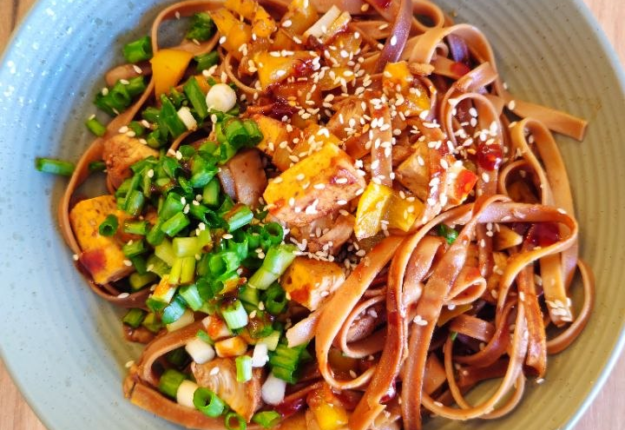
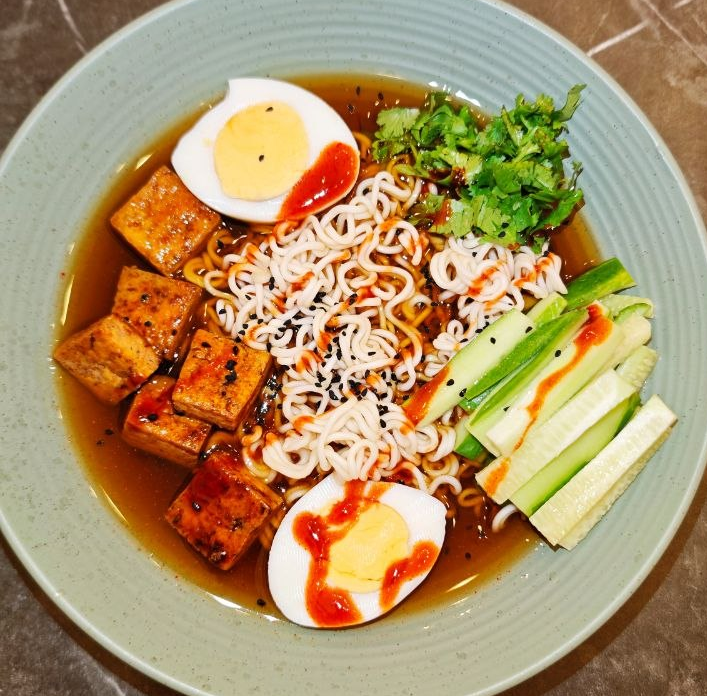
Spicy, refreshing and packed with flavor, this cold gochujang noodle soup is the perfect meal for a hot summer day.
An ice-cold mushroom broth seasoned with gochujang, soy sauce, rice vinegar and sesame oil is served with chilled
noodles, golden crispy tofu, boiled eggs, crunchy cucumber and plenty of fresh herbs.
The result is a bowl that is simultaneously spicy, tangy, slightly sweet and incredibly refreshing.
And the best part? Most of the ingredients can be prepared in advance, so assembling the soup takes only a few minutes.
Recipe Information
- Prep time: 15 minutes
- Cooking time: 15 minutes
- Chilling time: 30–60 minutes
- Total time: about 1 hour
- Servings: 2
- Difficulty: Easy
Ingredients
For the Cold Gochujang Broth
- 600 ml strong mushroom broth, completely chilled
- 1–1½ tbsp gochujang
- 1 tbsp soy sauce
- 1 tbsp rice vinegar
- 1 tsp toasted sesame oil
- 1 tsp honey or sugar
- 1 garlic clove, finely grated
For the Noodles and Toppings
- 200 g noodles
- 200 g firm or extra-firm tofu
- 2 eggs
- 1 small cucumber
- 1–2 green onions
- A generous handful of fresh cilantro
- 1–2 tsp sesame seeds
- Chili oil or sriracha, to taste
- 1 tsp soy sauce, for the tofu
- 1–2 tsp neutral cooking oil
How to Make Cold Gochujang Noodle Soup
1. Prepare the Mushroom Broth
Start with a flavorful mushroom broth. You can use homemade broth or a good-quality store-bought version,
but make it slightly stronger than you normally would. Because the soup is served cold, the flavors become
a little less intense once chilled.
Let the broth cool completely, then transfer it to the refrigerator for at least 30–60 minutes.
It should be properly cold before you assemble the soup.
2. Make the Spicy Gochujang Soup Base
Pour the chilled mushroom broth into a large bowl. Add the gochujang, soy sauce, rice vinegar,
sesame oil, honey and grated garlic.
Whisk thoroughly until the gochujang has completely dissolved into the broth.
Taste and adjust the seasoning. The broth should have a good balance of spicy, salty, tangy and slightly sweet flavors.
Add more gochujang if you want more heat, a little extra rice vinegar for acidity or another small drizzle of honey
if the broth tastes too sharp.
Return the broth to the refrigerator while you prepare the remaining ingredients.
3. Cook and Chill the Noodles
Bring a large pot of water to a boil and cook the noodles according to the package instructions.
Soba, somen, ramen-style wheat noodles or thin Korean wheat noodles all work well for this recipe.
Once cooked, drain the noodles immediately and rinse them thoroughly under very cold running water.
Gently rub and toss the noodles with your hands while rinsing to remove excess starch.
Drain extremely well. You don’t want excess water diluting the flavorful broth.
4. Make the Crispy Tofu
Pat the tofu dry with paper towels and cut it into bite-sized cubes.
Removing as much moisture as possible will help the tofu become golden and crispy.
Heat a little neutral oil in a non-stick or well-seasoned frying pan over medium-high heat.
Add the tofu in a single layer and cook for several minutes without moving it too much.
Turn the cubes and continue frying until golden and crispy on several sides, about 7–10 minutes in total.
During the final minute of cooking, add about 1 teaspoon of soy sauce to the pan.
Toss the tofu quickly and allow the soy sauce to caramelize around the edges.
Remove from the heat and set aside.
5. Prepare the Eggs and Vegetables
Boil the eggs to your preferred doneness. For slightly jammy yolks, cook them for approximately 7 minutes,
then immediately transfer them to ice-cold water. Peel and cut each egg in half.
Slice the cucumber into thin strips or half-moons. Finely slice the green onions and roughly chop the cilantro.
6. Assemble the Soup
Divide the cold noodles between two large bowls.
Pour the ice-cold gochujang mushroom broth around the noodles. Arrange the crispy tofu,
boiled egg and cucumber on top.
Finish with green onions, plenty of fresh cilantro, sesame seeds and a drizzle of chili oil or sriracha.
Serve immediately while everything is cold and refreshing.
Tips for the Best Cold Gochujang Noodle Soup
-
Make the broth really cold.
This is the most important part of the recipe. The soup tastes best when the broth is almost ice-cold. -
Make a strong mushroom broth.
Cold temperatures mute flavors, so a rich broth works much better than a delicate one. -
Rinse the noodles thoroughly.
This stops the cooking process, cools them down and removes excess starch so they stay pleasantly springy. -
Dry the tofu well.
Less moisture means a crispier, more golden crust. -
Adjust the gochujang.
Start with 1 tablespoon and increase it if you want a stronger, spicier broth. -
Add the toppings just before serving.
This keeps the cucumber crunchy and the tofu crispy.
What Noodles Should I Use?
This recipe is flexible, so you don’t need one specific type of noodle.
Thin wheat noodles are particularly good because they absorb the spicy broth without becoming too heavy.
Somen noodles make the soup especially light and refreshing, while soba adds a slightly nutty flavor.
Ramen-style noodles are a great choice if you prefer a chewier texture.
Variations
You can easily customize this cold noodle soup depending on what you have in the refrigerator.
Add shredded carrots, radishes, bean sprouts, edamame or thinly sliced cabbage for extra crunch.
For even more freshness, add a few slices of avocado or some fresh mint alongside the cilantro.
Kimchi is also an excellent topping if you want an additional fermented, spicy kick.
If you don’t eat eggs, simply leave them out and increase the amount of crispy tofu.
Can I Make It Ahead?
Yes. In fact, the broth benefits from being made ahead because it has plenty of time to become thoroughly chilled.
Prepare the gochujang mushroom broth up to a day in advance and keep it covered in the refrigerator.
The eggs and vegetables can also be prepared ahead of time. For the best texture, however,
cook the noodles and fry the tofu shortly before serving.
Serving Suggestion
Serve the soup straight from the refrigerator on a hot day. For an extra-cold version,
you can even add two or three ice cubes to each bowl just before serving.
Spicy gochujang, savory mushroom broth, cold springy noodles and hot crispy tofu create a fantastic combination
of temperatures and textures. It’s refreshing enough for summer but satisfying enough to be a complete meal.
Tip: Chill the broth really well — the colder it is, the better!